Central African Republic :
Maintaining over the national territory was particularly complicated in Central African Republic since the civil war of 2013, during which several armed groups fought and seized areas of the country. Aimed to reduce violence and reintegrate armed factions the Khartoum Peace Agreement was signed by the government in 2019, but to secure important and strategic cities like Bangui, Bambari and Bria, the state had to rely on foreign support because of a lack of institutions strengths and a limited military capacity. Even though armed groups have the control on significant rural areas, Government efforts mostly focuses on national institutions rebuilding, the reorganization of armed forces and the restoration of basic public services.
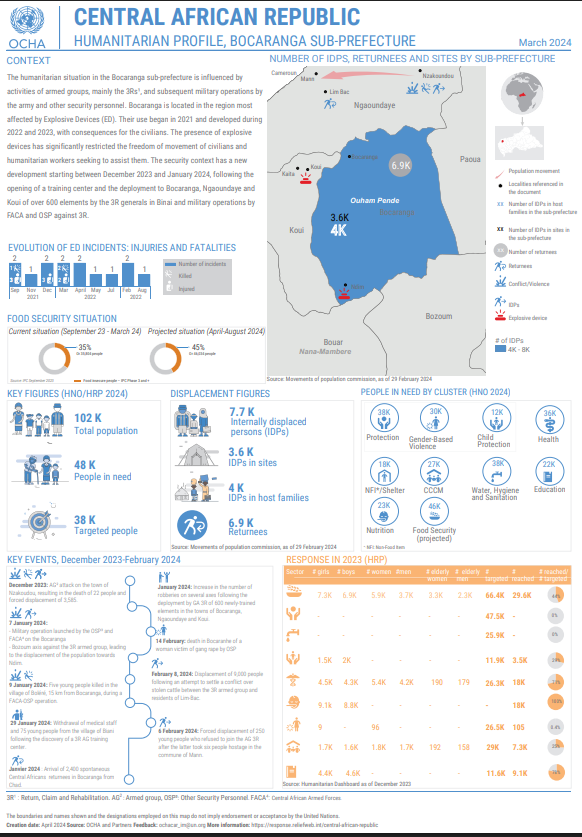
Although the Government did some efforts to face the situation, Central African Republic was also in need of international support to survive. In 2014 was created MINUSCA, a United Nations peacekeeping mission which gathered around 14,500(military, police and civilian staff) personnel charged to protect civilians and support political stability. Several countries around the world also provided support to the situation like Russia, France, and even Rwanda concerning military and security fields. 2 million of people in need of food are assisted by humanitarian organizations as well as people in need of healthcare and shelter, while nearly one quarter of the population remains displaced. All those efforts were very necessary and helping but the country continued facing long term instability and deep challenges
Democratic Republic of Congo:
Large scale military operations were launched since the beginning of the crisis by the Congolese government especially in North Kivu, South Kivu, and Ituri in which the the violence still persist since the early 2000s. Military authority against armed groups like M23 or ADF was planned to be strengthen after the government declared from 2019 onward a “state of siege” in parts of North kivu and Ituri. With Uganda and Rwanda, their neighboring countries DRC signed Security and Diplomatic Agreements, to reduce cross border instability. Although there are all these efforts are present, over 100 armed groups keep activity in eastern DRC , Obligating the government to rely on international assistance and support mostly from Unites Nations.
International support played a big main role in the Congolese crisis situation. Since 1999 also was installed a peacekeeping mission, in fact one of the largest UN mission worldwide, the MONUSCO with around 14,000 peace keepers deployed with the only objective to protect civilians and assist the country’s stabilization. Angola and East African Community (EAC) also contributed to the support of the situation, Angola with mediation efforts and EAC with the deployment of reginal forces in 2022. Over 7 million internally displaced people was provided aid by humanitarian organization support by UN. It makes the Democratic Republic of Congo one of the largest humanitarian crisis in the world. Even though those interventions are effective, the lack of funds and the on going insecurity still restricts the full effectiveness of the assistances.